
 channel247 online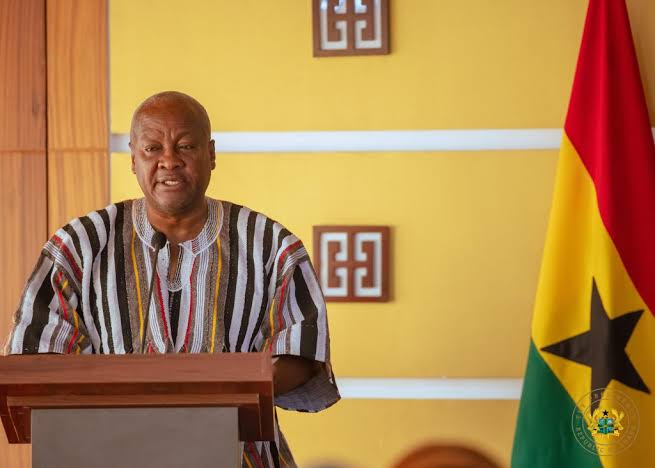
President John Dramani Mahama has presented the Accra Reset Initiative as a practical and results-driven development model, aimed at helping African countries respond effectively to a rapidly changing global order.
Speaking at the Accra Reset Davos Convening on the sidelines of the World Economic Forum in Davos, Switzerland, President Mahama said the initiative was designed not as another declaration or wish list, but as a workable blueprint to address Africa’s long-standing development challenges.
He noted that the global multilateral system established after the Second World War is under strain, with bilateral relations becoming increasingly transactional and global humanitarian assistance declining.
Against this backdrop, President Mahama argued that Africa must rethink its development approach and build internal capacity to drive growth, resilience and sovereignty.
The President explained that the Accra Reset focuses on cutting waste, restoring accountability and building systems that deliver measurable results in areas such as jobs, health, education and industrial development.
Drawing on Ghana’s recent experience, he said the country has demonstrated that disciplined leadership and focused reforms can reverse economic decline. He cited improvements in macroeconomic stability, reduced government spending and digitalisation efforts aimed at curbing corruption.
However, President Mahama stressed that Ghana’s progress alone is insufficient, calling for coordinated action across Africa and the Global South to scale up successful reforms and development models.
He identified Africa’s dependence on donors, external security arrangements and raw material exports as major obstacles to sustainable development, describing them as a “triple dependency” that must be broken.
President Mahama called for stronger regional cooperation, including joint negotiation on critical minerals, the establishment of regional manufacturing hubs and greater investment in skills development to create jobs for the continent’s growing youth population.
He concluded by urging global partners to engage Africa through partnerships based on mutual respect and shared responsibility, insisting that the Accra Reset offers a realistic pathway for countries seeking to build inclusive growth and long-term prosperity.