
 channel247 online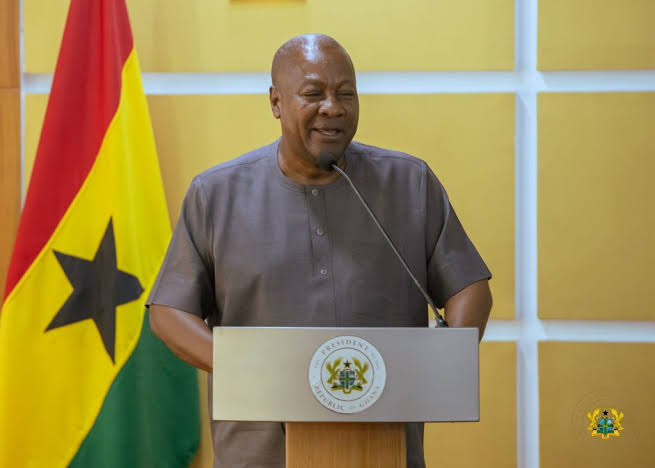
President John Dramani Mahama has called for stronger continental cooperation, urging African countries to jointly build industries, produce key goods locally, and negotiate collectively to secure better outcomes in the global economy.
Delivering remarks at the Accra Reset Davos Convening on the sidelines of the World Economic Forum in Davos, Switzerland, President Mahama said Africa’s fragmented approach to development has weakened its bargaining power and slowed industrial progress.
“No African country can industrialise alone,” he said, stressing that unity must move beyond slogans to become a deliberate economic strategy.
President Mahama noted that the global multilateral system is under strain, with international relations increasingly driven by transactional interests, making it imperative for Africa to act as a bloc to protect its priorities.
He identified what he described as Africa’s “triple dependency” — reliance on others for security decisions, donor funding for health and education, and the export of critical minerals without capturing value — as a major obstacle to true sovereignty.
According to him, Africa’s continued role as a raw material supplier leaves its economies vulnerable, despite the continent possessing many of the world’s critical minerals needed for global energy transition and industrial growth.
President Mahama used the platform to promote the Accra Reset Initiative, a development blueprint aimed at scaling successful reforms across Africa and the Global South through cooperation, accountability and shared prosperity.
He called for the creation of regional manufacturing hubs, integrated energy and digital infrastructure, and coordinated investment platforms to create jobs for Africa’s growing youth population.
The President also urged African countries to negotiate jointly on critical minerals, trade and climate finance, arguing that collective bargaining would enable the continent to capture more value and secure fairer terms.
President Mahama concluded by calling on African leaders and global partners to support a new model of partnership based on mutual respect, insisting that Africa’s future depends on its ability to build together, produce at home, and negotiate as one.
 Yaw Boagyan